
Kim Hak-soon’s public testimony helped to break the silence about the so-called “comfort women,” who were forced into sexual slavery by the Japanese military during World War II.
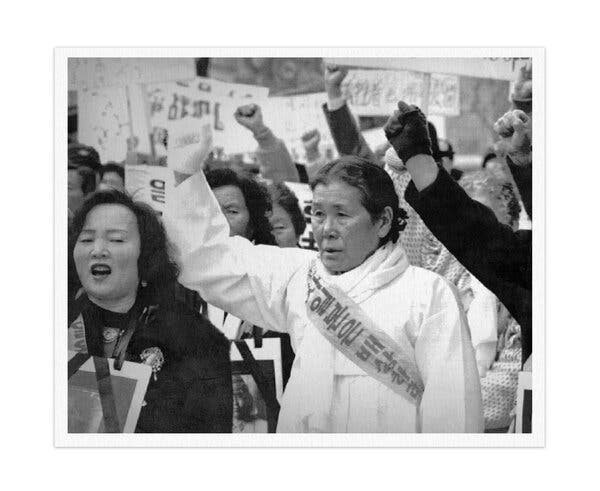
In one of their “Overlooked” obituary articles The New York Times honored “Comfort Woman” Kim Hak-soon.
Kim Hak-soon’s public testimony helped to break the silence about the so-called “comfort women,” who were forced into sexual slavery by the Japanese military during World War II.
The New York Times
By Choe Sang-Hun
Oct. 21, 2021
This article is part of Overlooked, a series of obituaries about remarkable people whose deaths, beginning in 1851, went unreported in The Times.
Overlooked No More: Kim Hak-soon, Who Broke the Silence for ‘Comfort Women’
Her public testimony about the horrors of sexual slavery that Japan had engineered for its World War II military encouraged other survivors to step forward.
SEOUL — On Aug. 14, 1991, a woman who lived alone in a flophouse here faced television cameras and told the world her name: Kim Hak-soon. She then described in gruesome detail how, when she was barely 17, she was taken to a so-called comfort station in China during World War II and raped by several Japanese soldiers every day. Read more here.