
Joan Ringelheim, scholar of women during the Holocaust, dies at 82
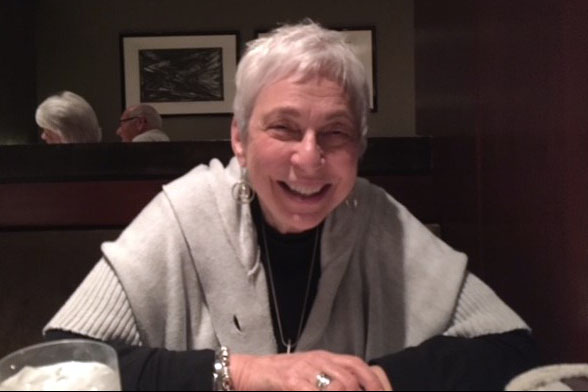
Dr. Joan Ringelheim, who could be described as the mother of the study of women and the Holocaust, died on October 22, 2021.
Joan’s early struggles to include women’s experiences in Holocaust history finally came to fruition, but she was a pioneer when few people wanted to listen. In 1983 she organized the first symposium on women and the Holocaust at Stern College in New York City.
This obituary from The Washington Post discusses Dr. Ringelheim’s achievements and struggles regarding putting women’s experiences on the Holocaust Studies agenda.
_______
Joan Ringelheim, scholar of women during the Holocaust, dies at 82
By Emily Langer
The Washington Post
October 29, 2021 at 8:46 p.m. EDT
Joan Ringelheim spent nearly two decades on the staff of the U.S. Holocaust Memorial Museum in Washington, where for years she oversaw its oral history archive, one of the most significant collections of Holocaust testimonies in the world.
Her study of the Nazi murder of 6 million European Jews, she once remarked, had taught her that “nobody experienced ‘the Holocaust.’ ” Rather, she said, each person present lived one piece of it, and only through the study of those many pieces would the vast whole become visible.
But for years — decades, even, after the liberation of the camps — an entire category of experiences, in Dr. Ringelheim’s observation, went overlooked in the scholarly community.
“It was my position that the lives of women had been obscured or erased from Holocaust history,” she wrote in an essay published last year in the volume “Her Story, My Story?: Writing About Women and the Holocaust.” “Women’s experiences had been neutralized into a so-called ‘human perspective’ so that issues related specifically to women were excluded from Holocaust history.”
Beginning in the 1970s, Dr. Ringelheim led a small but insistent group of scholars who forced historical attention on the female victims of Nazi persecution — the women who muffled their babies’ cries in hiding, comforted their children on overnight trains to Auschwitz and endured sexual violence and exploitation, often to survive.
“Jewish women and men experienced unrelieved suffering during the Holocaust,” Dr. Ringelheim wrote in the volume “Women in the Holocaust,” edited by Dalia Ofer and Lenore J. Weitzman. But “Jewish women carried the burdens of sexual victimization, pregnancy, abortion, childbirth, killing of newborn babies in the camps to save the mothers, care of children, and many decisions about separation from children.”
“If in the gas chambers or before the firing squads all Jews seemed alike to the Nazis,” Dr. Ringelheim continued, “the path to this end was not always the same for women and men. The end — namely, annihilation or death — does not describe or explain the process.”
Dr. Ringelheim, a scholar credited by colleagues with leading historians to a deeper understanding of the Holocaust in all its dimensions, died Oct. 22 at her home in Columbia, Md. She was 82 and had breast cancer, said her spouse, Ellen Carr.
Dr. Ringelheim was credited with conducting groundbreaking research on women in the Holocaust. (Ellen Carr)
The daughter of Jewish immigrants from Poland, Dr. Ringelheim lost numerous relatives in the Nazi slaughter and entered academia in the 1960s, just as the field of Holocaust studies began to take shape.
She brought to her scholarship a background in philosophy as well as feminist theory and by the mid-1970s found herself asking a seemingly simple but ultimately provocative question: What did it mean to be a woman during the Holocaust?
In 1983, she and Esther Katz, both then affiliated with the Institute for Research in History in New York, organized a conference titled “Women Surviving: The Holocaust.” They invited participants including Cynthia Ozick, the writer best known for her short story “The Shawl,” about a mother who tries to conceal her young daughter in a concentration camp by hiding her in the mantle of the story’s title. A guard ultimately discovers the child and tosses her tiny body against an electrified fence.
Ozick rejected the invitation to the conference and replied, according to Dr. Ringelheim, that by examining the specific concerns of women, the organizers were “asking a morally wrong question, a question that leads us still further down the road of eradicating Jews from history.”
“Your project is, in my view, an ambitious falsehood,” Ozick wrote, according to Dr. Ringelheim’s account. “The Holocaust happened to victims who were not seen as men, women, or children . . . but as Jews.”
But for scholars who supported and built on Dr. Ringelheim’s scholarship in the succeeding years, the conference was a revelatory event.
“Until 1983, with the first conference on women and the Holocaust, we did not have a dedicated study into how women specifically navigated aspects of their lives in these moments of crisis,” Jennifer V. Evans, a professor of history at Carleton University in Ottawa, wrote in an email.
“We didn’t study how women navigated adolescence and coming of age in the shadow of mass death, how they fought to keep family together, care for children and elders in ghettos, how they experienced pregnancy, childbirth and menstruation in the camps, how young and old experienced sexual vulnerability, abuse, sexual barter and rape.”
Dr. Ringelheim’s scholarship, she added, “opened the door to future histories.”
Over two days, 400 scholars, survivors, students, children of survivors and others gathered at the Stern College for Women at Yeshiva University in Manhattan for a gathering covered by the New York Times.
Thus, she led us through intellectual and emotional journeys focused on aspects of Holocaust history and the history of the development of the Museum. From the opening moment she was candid, thoughtful, fiery, incisive, funny, warm, engaging, supportive and loving. And patient.
Some survivors recalled that domestic skills, such as the ability to sew uniforms, allowed them to survive in the camps. Those who had fought in the resistance reported that they often took on the most perilous assignments because they were perceived as less suspect than their male comrades.
“People couldn’t imagine that a nicely dressed young woman could be up to mischief,” recounted Vera Laska, a Czech resistance fighter.
Jolly Zeleny, a survivor of Auschwitz, Bergen-Belsen and several other camps, recalled the contrast she noted between male and female inmates. “Both men and women were skeletons, in identical stripes, yet there was such a difference,” she said. “The men’s bodies reflected so much more pessimism than did ours.”
Aside from its academic value, the conference offered female survivors a sense of community and the assurance that they were not alone.
“It was a way of, first of all, bringing attention to the issue, but also making the women feel comfortable,” said Katz, a scholar of women’s studies who later founded the Margaret Sanger Papers Project at New York University. “The more women who talked about it publicly,” Katz said, “the easier it was for other survivors to come forward.”
Joan Ringelheim was born in Brooklyn on May 29, 1939. For a period of her adult life she used the middle name Miriam, after her paternal grandmother, who was murdered in the Holocaust. In the United States, Dr. Ringelheim’s father owned a restaurant supply business, and her mother worked as a department store clerk.
In her contribution to the book “Her Story, My Story?,” edited by Judith Tydor Baumel-Schwartz and Ofer, Dr. Ringelheim wrote that she first met Holocaust survivors when she was 11 or 12 years old.
“At first, survivors frightened me,” she wrote. “I felt that they might have done something terrible in order to survive. In retrospect I think that I didn’t want to hear how awful it was for them because it was too much for me.”
Dr. Ringelheim enrolled at Boston University, where she received a bachelor’s degree in history in 1961, followed by a master’s degree in 1965 and a PhD in 1968, both in philosophy.
She taught at several colleges, including DePauw University in Indiana, before joining the Holocaust museum in 1989.
Sara J. Bloomfield, the museum’s director, credited Dr. Ringelheim in an interview with playing “a very critical role in the creation” of the permanent exhibit before the museum opened in 1993. Dr. Ringelheim later served as director of education and director of oral history before retiring in 2007. She personally conducted many interviews, sometimes spending entire days with survivors in their homes, recording their unsparing testimonies.
She and Carr, who were partners of 13 years, were married in 2018. Besides Carr, of Columbia, survivors include a brother.
In the early years after the end of World War II and to this day, perhaps the most famous victim of the Holocaust is a woman — a young one, Anne Frank, the German-born diarist whose account of her family’s time in hiding in an Amsterdam annex became an international bestseller, the basis of a Pulitzer Prize-winning play and the subject of a 1959 Hollywood movie.
Anne died of typhus in 1945, at age 15, at Bergen-Belsen. Over the years, millions of readers have drawn inspiration, even hope, from her posthumously published diary, and her declaration that “in spite of everything, I still believe that people are really good at heart.”
Speaking to the New Jersey Jewish News, Dr. Ringelheim once said that “there is no redemptive meaning to be found for me in the Holocaust.” The event could be repeated, she feared. “Our obligation,” she added, “even if it does no good, is to remember.”
Another article discusses her work at the United States Holocaust Memorial Museum and information on her book. There is also a link to a Zoom conversation with her.
May her memory be for a blessing.