Remember the Women Institute Presentation at AHO Winter Conference 2023
HOLOCAUST THEATER INTERNATIONAL INITIATIVE
Miami, Florida, Thesis Hotel and University of Miami
January 7-10, 2023
The Association of Holocaust Organizations (AHO) 2023 Winter Conference, with a panel on the theme Holocaust Theater International Initiative, took place (for members) in Miami, Florida, from January 7-10, 2023. Remember the Women Institute was represented by founding director Dr. Rochelle G. Saidel, participating via Zoom to discuss our Women, Theater, and the Holocaust project and resource handbook. She is a board member of the Holocaust Theater International Initiative (NTII), and she spoke on a January 8 panel entitled NJTF HTII Research: Holocaust Theater Catalog (HTC) and Remembrance.
The panel consisted of readings, live panelists, theater scholars, and other professionals via Zoom. In addition to Dr. Saidel, the panelists were:
- Arnold Mittelman, President, National Jewish Theater Foundation (NJTF) and Executive Director, Holocaust Theater International Initiative (HTII) at University of Miami Miller Center
- Alvin Goldfarb, Lead Scholar HTC, President and Professor Emeritus, Western Illinois University
- Derek Goldman, Director of the Laboratory for Global and Politics, Georgetown University
- Teresa Eyring, Executive Director, Theatre Communications Group
- Doug Reside, Curator of Billy Rose Theatre Division, New York Public Library
- Betzy Lynch, CEO of Lawrence Family JCC and San Diego Center for Jewish Culture
- Chair: Linda Medvin, Director, Arthur and Emalie Gutterman Family Center for Holocaust and Human Rights Education at Florida Atlantic University
- David Strathairn, Oscar-nominated actor who plays Jan Karski, was supposed to make a Zoom presentation but could not participate because of a power outage.
Women, Theater, and the Holocaust: Panel Remarks
by Dr. Rochelle G. Saidel
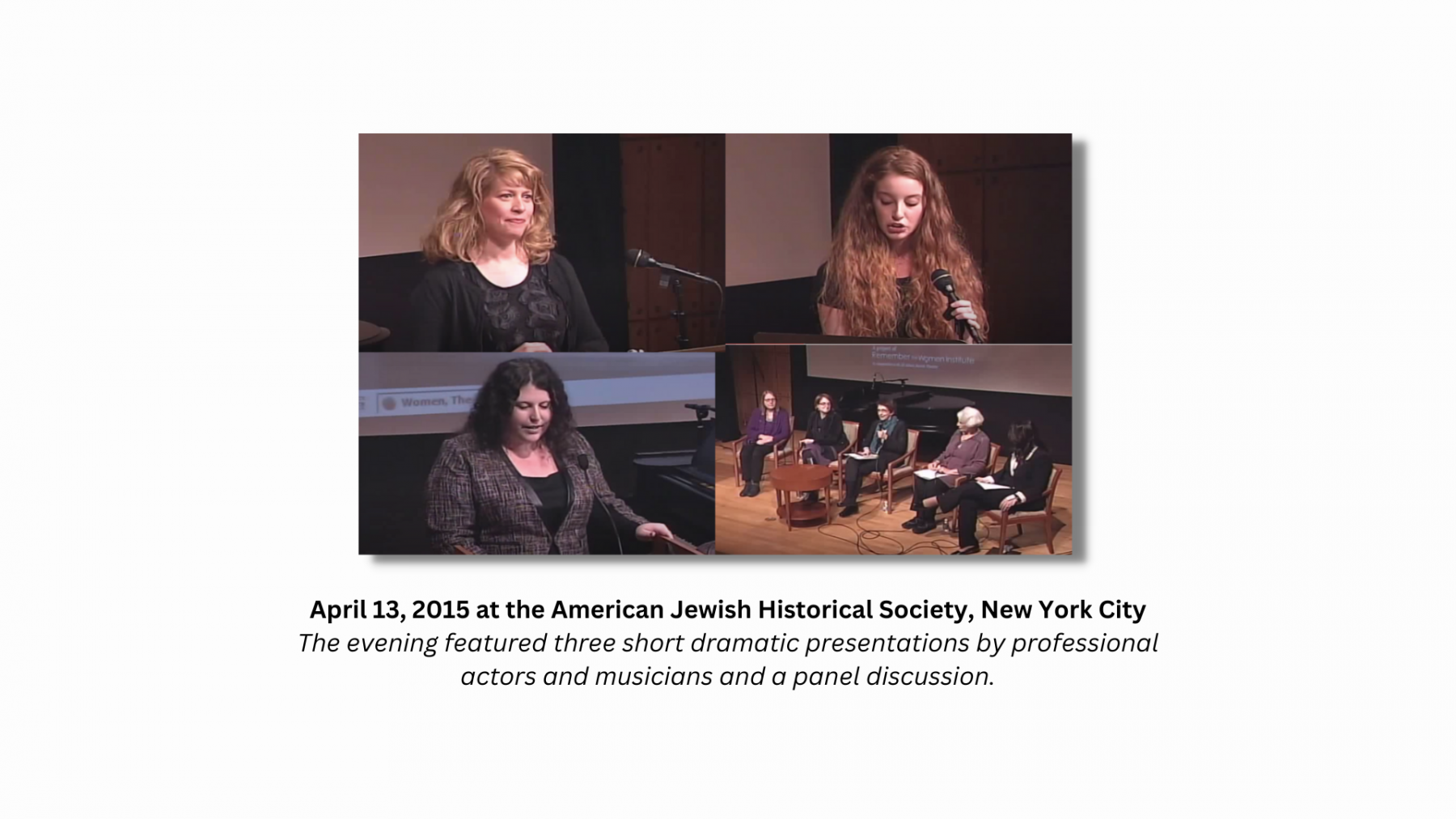
Remember the Women Institute was founded in New York City in 1997, dedicated to telling women’s stories and integrating women’s experiences into history, especially Holocaust history. Our Women, Theater, and the Holocaust project began in 2015 with the launch of our Women, Theater, and the Holocaust Resource Handbook and our annual Yom HaShoah readings of short plays or excerpts by or about women.
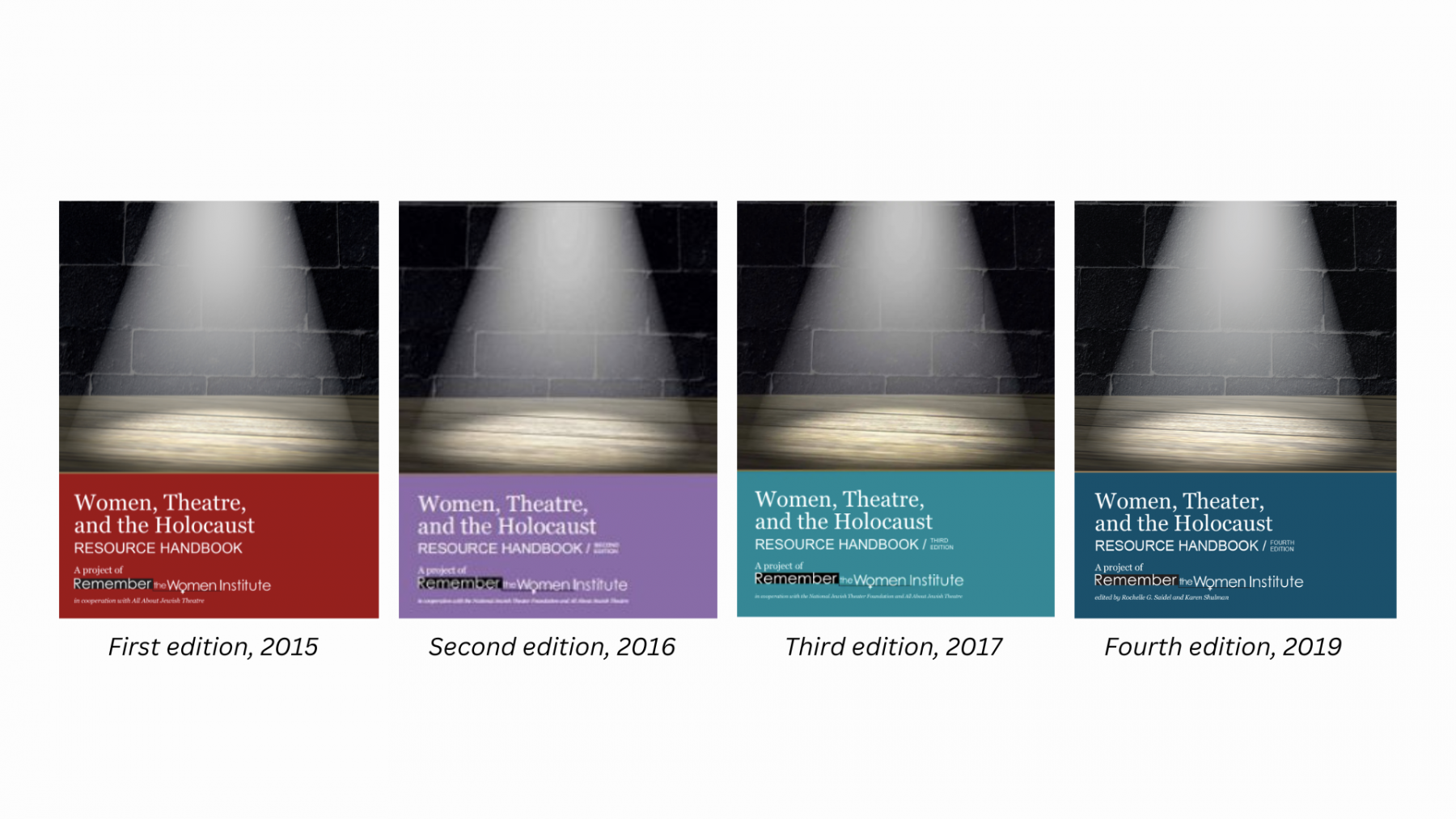
The free online handbook is available from this website. It has a detailed introduction, annotated bibliographies of plays about women during the Holocaust; of plays about the Holocaust written by women; and relevant books. There is also a framework for teaching, as well as personal essays about aspects of creating and staging theatrical works about women and the Holocaust. For our forthcoming fifth edition, in alphabetical order, the essays are by are Dr. Meghan Brodie, Cynthia L. Cooper, Dr. Patrick Henry, Dr. Velina Hasu Houston, Susan B. Katz, Naomi Patz, Dr. Alice Shalvi, and myself. Dr. Brodie, a professor in the Department of Theater and Dance at Ursinus College, and playwright Cynthia L. Cooper have been working with us since the inception on our annual readings events.
The first edition of our handbook, edited by Karen Shulman and me, was launched in conjunction with our first program of Yom HaShoah readings in 2015. Truthfully, we got into this theater project by accident, but by now it is a favorite. Our fifth edition will come out on April 20, 2023, at our annual readings event. Samantha McLaughlin has joined Karen Shulman and me as a co-editor, and her expertise is making this forthcoming edition much more interactive and engaging. So stay tuned.
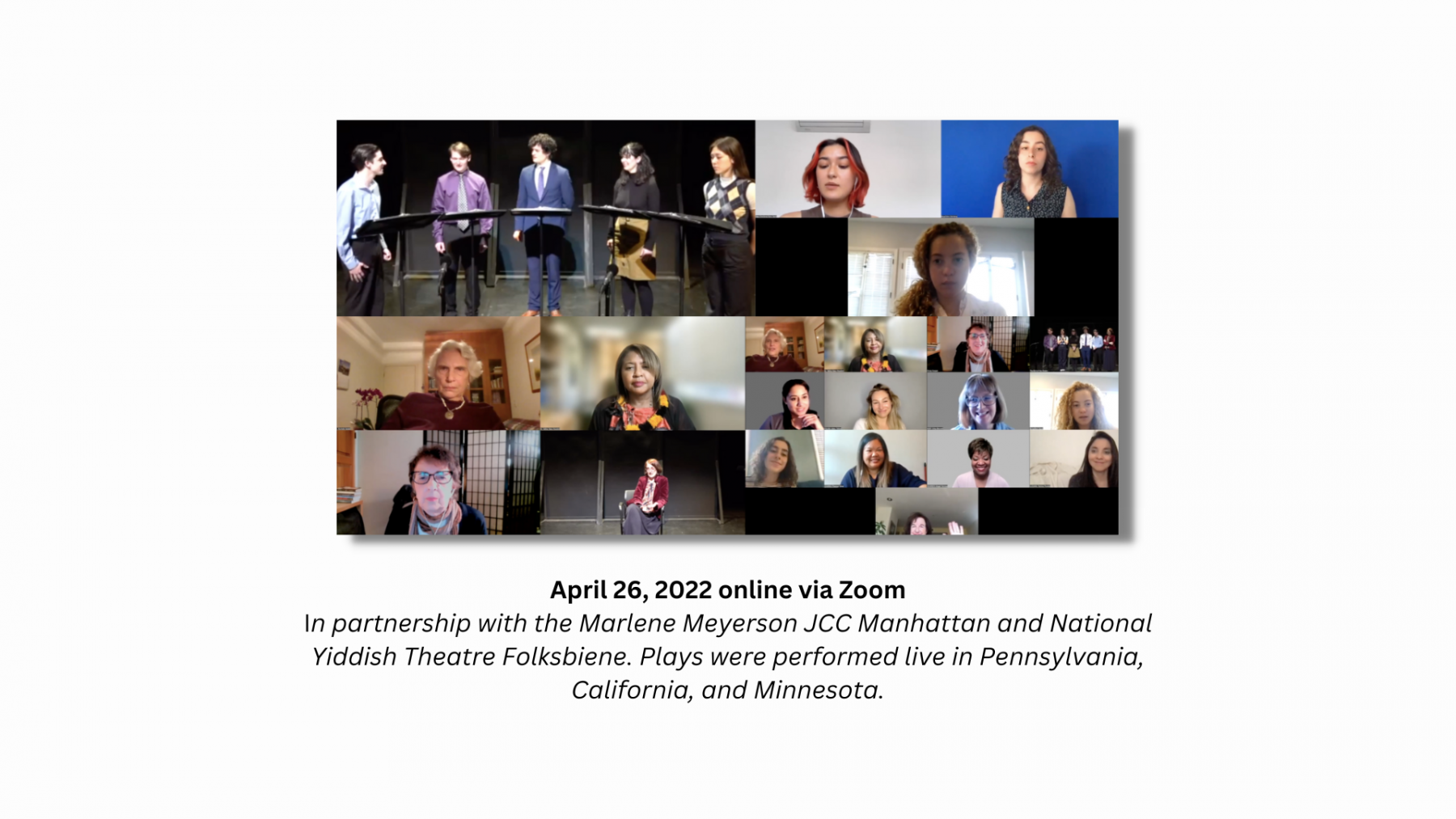
Except for that horrible year 2020, we have had events every year since 2015. In 2021 and 2022 they were via Zoom, and in 2023 we are planning to be live again. As you know, the pandemic wreaked havoc on live events, but the innovation of programs by Zoom also had advantages. In 2022 we had audience from as far away as Australia. And the readings themselves were performed live, in Minneapolis, Los Angeles, and Pennsylvania.
Our plays have been diverse, ranging from adaptations of plays conceived in concentration camps to addressing such issues as sexual violence, various forms of resistance, post-Holocaust problems for rescuers, the Stolperstein (commemorative stumbling stone) project, and the relationship between the Holocaust and the plight of later refugees. We even had some music over the years: Jenny Lee Mitchell performing Terezin Cabaret: Ilse Weber’s Letters and Songs and Cantor Shira Ginsburg performing from her Bubby’s Kitchen, about growing up with grandparents who were heroes of the resistance in Belarus. Playwrights, professors of theater, directors, students, and professional actors have all been generous with their time and talent.
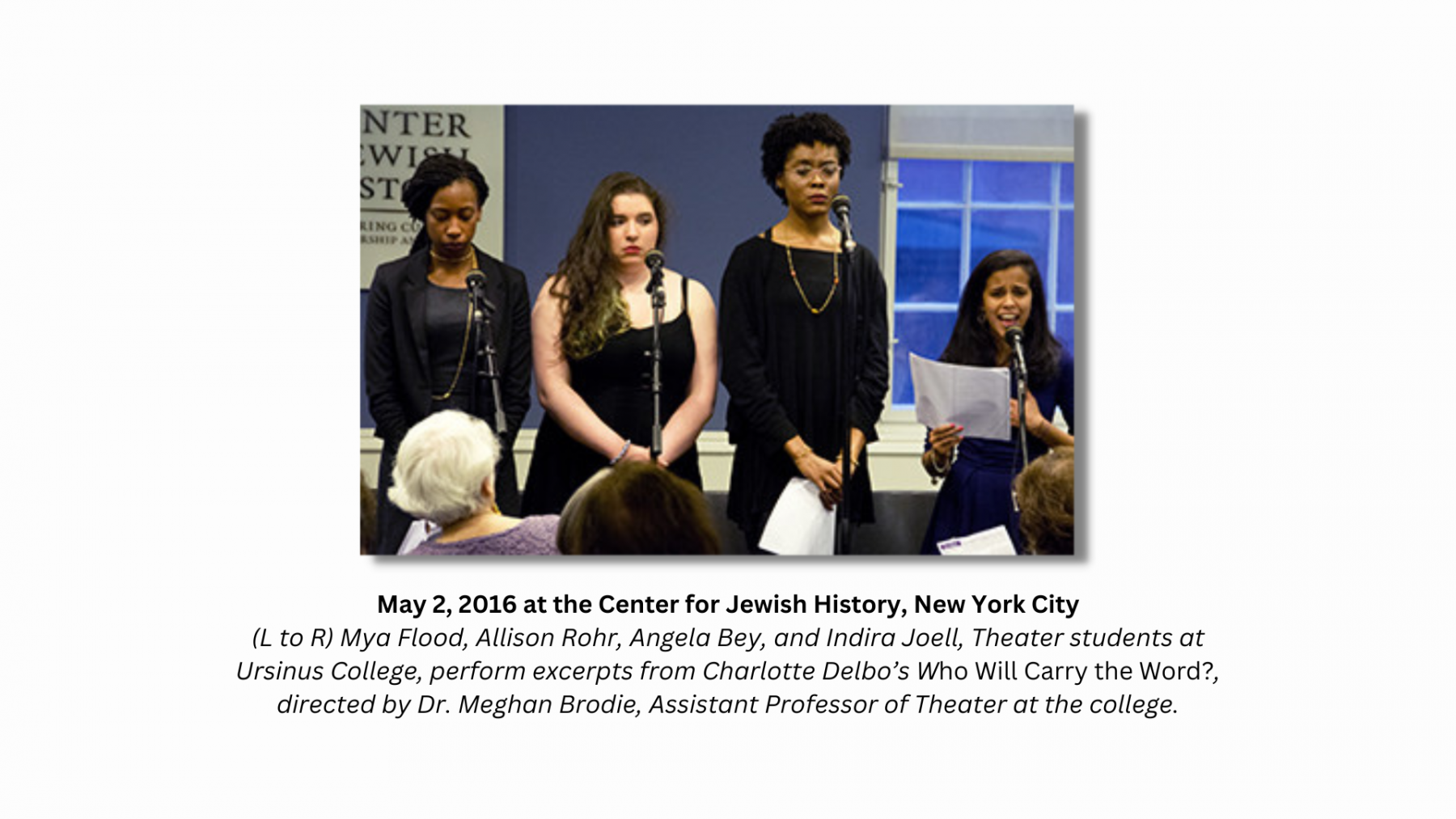
For our 2016 readings event, playwright Cynthia Cooper surprised me with the premiere of her The Spoken and the Unspoken. She had more or less interviewed me—I thought we were just having a friendly conversation—and she wrote and presented this short play about the resistance to Remember the Women Institute’s work and my work to uncover stories of sexual violence during the Holocaust. I hadn’t expected to hear my words from the mouth of an actor.
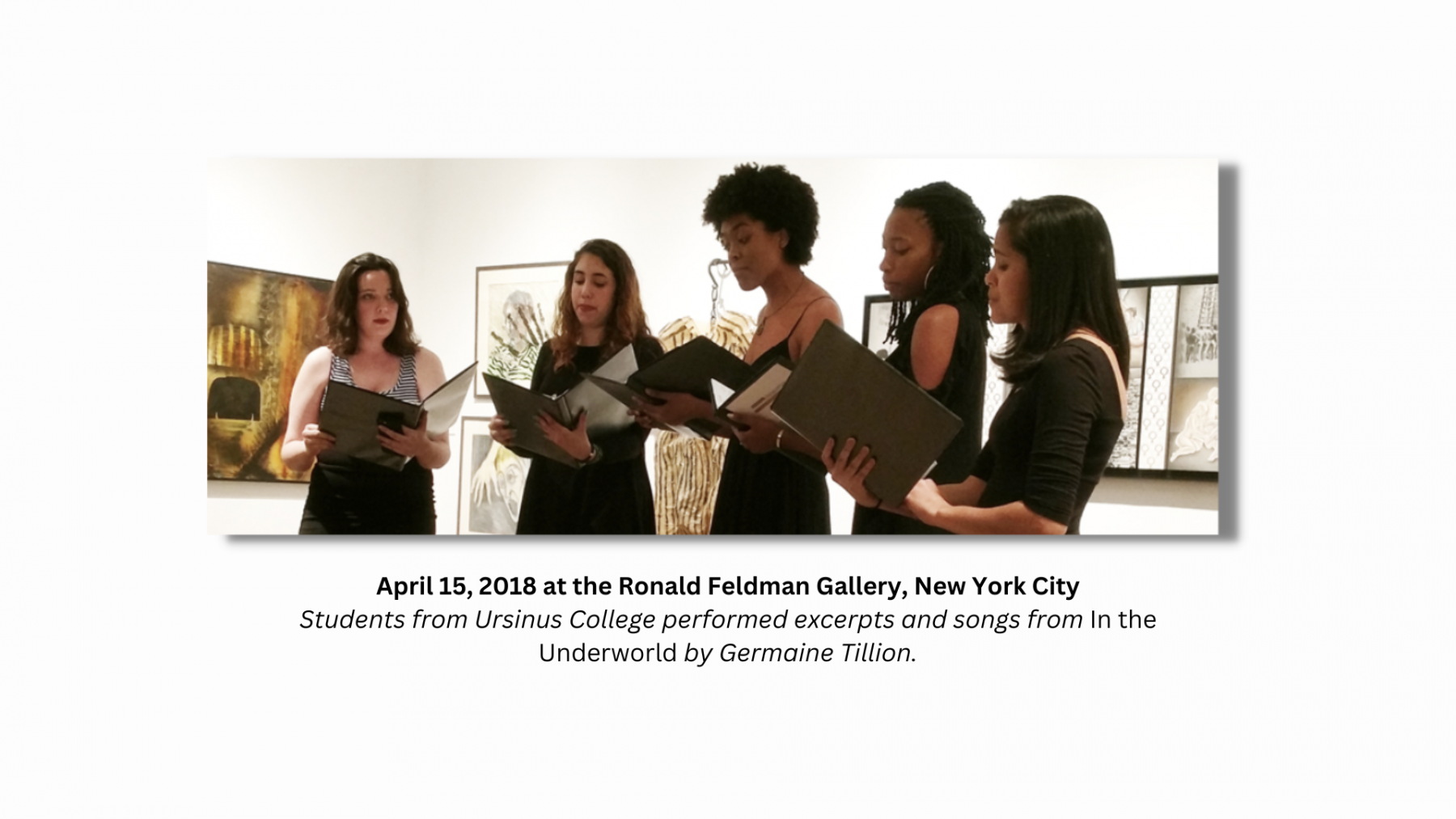
In 2018 our theater event was created in connection with our international group art exhibition, VIOLATED! Women in Holocaust and Genocide, at the Ronald Feldman Gallery in New York City, and held at the SoHo gallery. Like the exhibition, the program focused on sexual violence.
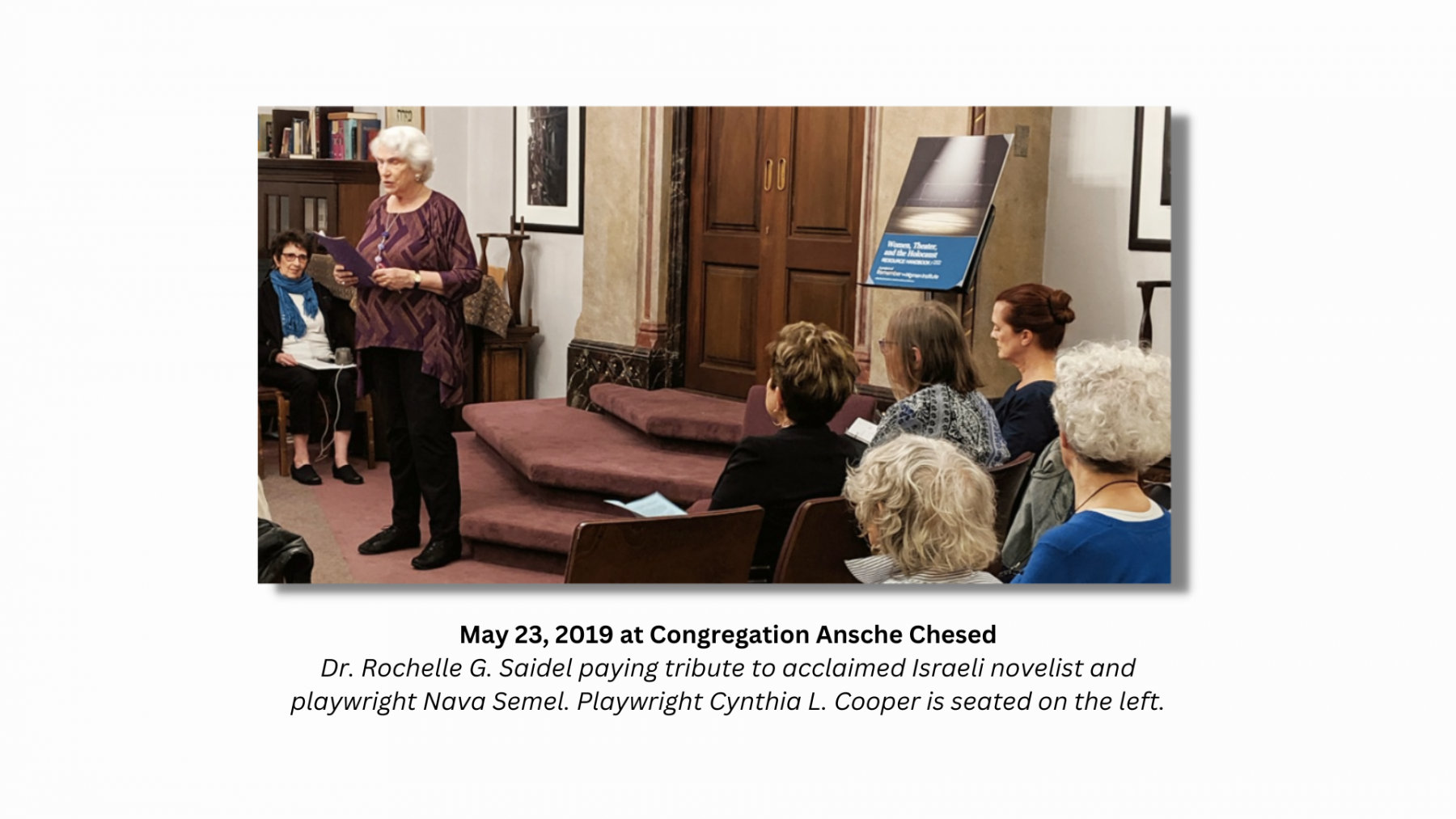
The fourth edition of the resource handbook – the last pre-Covid edition — was launched in May 2019, at our last live event until this year. The readings included Dr. Brodie’s play-in-progress about Claude Cahun and Marcel Moore, lesbian surrealist artists who engaged in resistance work on the Channel Island of Jersey.
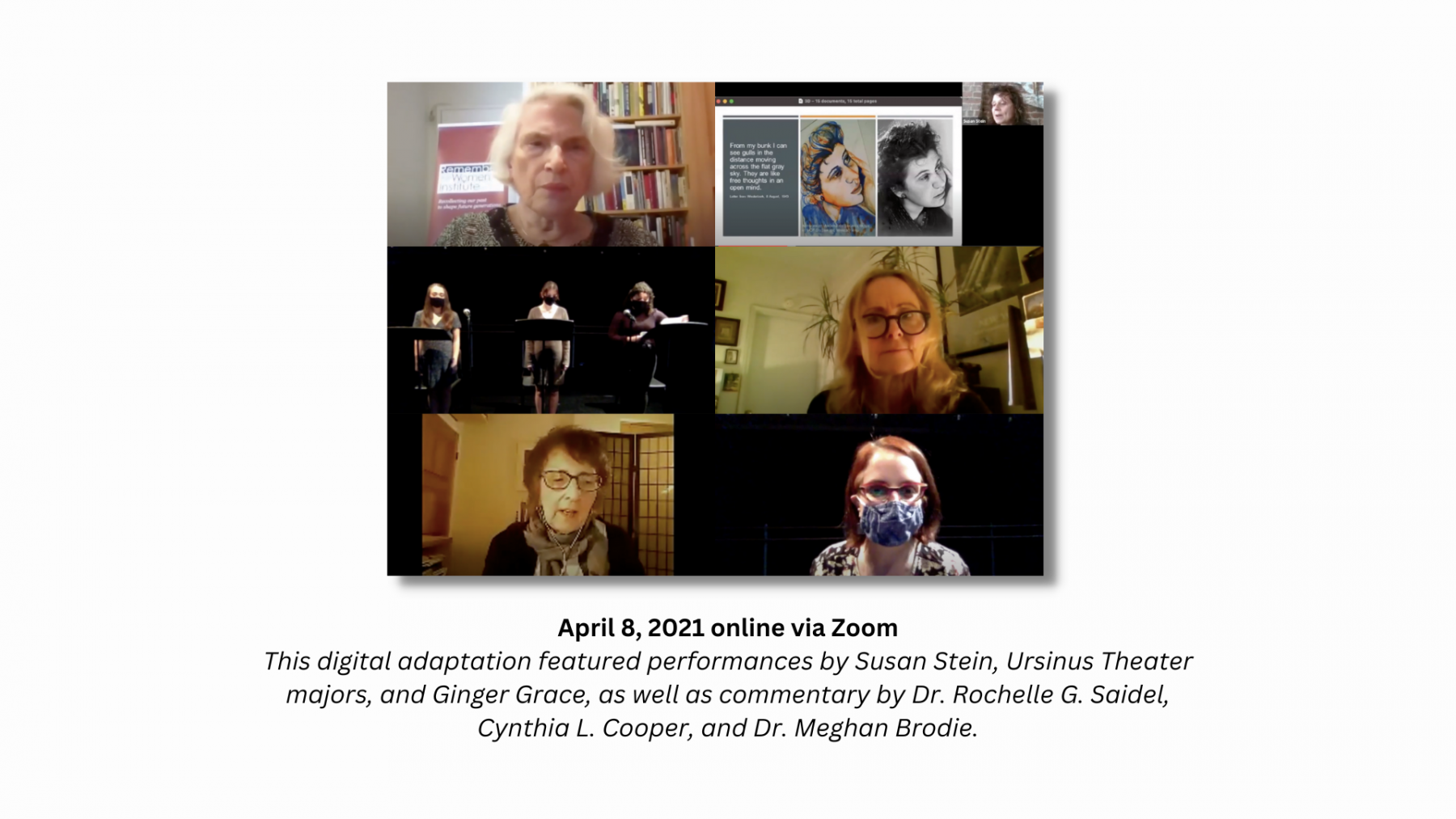
For our 2021 Zoom presentation, we included Etty excerpts performed by Susan Stein, adapted from Dutch Holocaust victim Etty Hillesum’s diary and presented by Stein internationally. We continued with our Zoom format in April 2022, and our partnership with the Marlene Meyerson JCC Manhattan and National Yiddish Theatre Folksbiene gave us a broad international virtual audience. Excerpts from Folksbiene’s English translation of The Bird of the Ghetto, a 1958 Yiddish play by Holocaust survivor Chava Rosenfarb, were presented by Dr. Brodie’s theater students; excerpts from Oh, I Remember the Black Birch by Dr. Velina Hasu Houston told the story of a Holocaust refugee in Japan; and excerpts from I Was A Stranger Too by Cynthia L. Cooper was about a child of Holocaust survivors helping more recent refugees.
And on April 20, 2023, we plan to launch the interactive fifth edition of the resource handbook at our first live performance since 2019, at the Marlene Meyerson JCC Manhattan, in cooperation with them and with National Jewish Theater Folksbiene and the Holocaust Theater International Initiative. Details are forthcoming about our 2023 readings and the launch of our new resource handbook on April 20.