
December 2 – 9, 2021

On December 2 – 9, 2021, we brought our She’s Gone mini-exhibition to Washington, DC, to fight intimate partner violence.
Our She’s Gone mini-exhibition was presented from December 2 to 9, 2021, at the Strongin Collection art gallery, 1631 Wisconsin Avenue NW, Georgetown, in Washington, DC, with an opening event at 6:30 PM on December 2.
Remember the Women Institute, in partnership with the Strongin Collection, She’s Gone, and the Moment Gallery of Moment Magazine, and in cooperation with the Embassy of Israel to the United States, brought part of Israeli artist Keren Goldstein’s She’s Gone art installation to Washington, DC in early December. After opening on December 2, the mini-exhibition ran for a week. The She’s Gone art installation, which features the clothing of Israeli murdered victims of intimate partner violence, speaks on behalf of all of the innocent victims of violence inflicted by spouses or other family members. Remember the Women Institute added to the exhibition two victims’ garments from the United States, those of Jana Lynn Mackey and Simeonette (Sissy) Mapes.
The exhibition also featured a video of All Databases Are Incomplete, a play written specially to accompany our project by Cynthia L. Cooper and performed by professional actor Lisa Pelikan.
The December 2 opening event included remarks by gallery owner Robin Strongin; Joan Dean, representing Remember the Women Institute; award-winning author of No Visible Bruises, Rachel Louise Snyder; Moment Magazine Editor-in-chief Nadine Epstein; and Emily Gilgoff, Community Affairs Director of the Embassy of Israel to the United States; as well as an important message from U. S. Representative Carolyn Maloney (D-NY).
See the video above.
__________
The five victims whose clothing and stories were featured in the exhibition are:
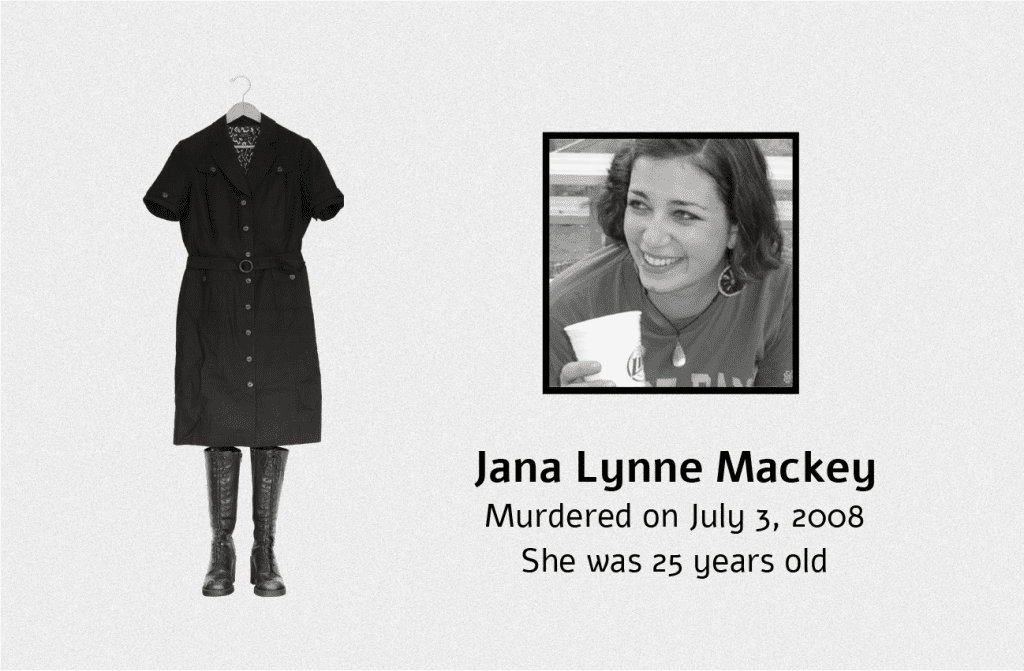
Jana Lynne Mackey lost her life to violence on July 3, 2008, perpetrated by an ex-boyfriend in Lawrence, Kansas. She was 25 years old.
The University of Kansas law student was an advocate for women’s rights and spent years volunteering to aid victims of sexual assault and domestic violence. She had worked on several state and national political campaigns, served three years as one of the youngest lobbyists at the Kansas State Capitol for the National Organization for Women and the Kansas Equality Coalition, and had volunteered endless hours caring for victims of sexual and domestic violence. Jana believed a law degree was her next step to becoming the most effective advocate possible for women and underrepresented groups. She inspired others through her words, song, and actions. Created in her memory, Jana’s Campaign has the mission of providing educational programming to help prevent gender and relationship violence, working through secondary schools, colleges, universities, community-based organizations, and agencies. She called the boots on display her “power boots.” Her murderer hanged himself in prison.
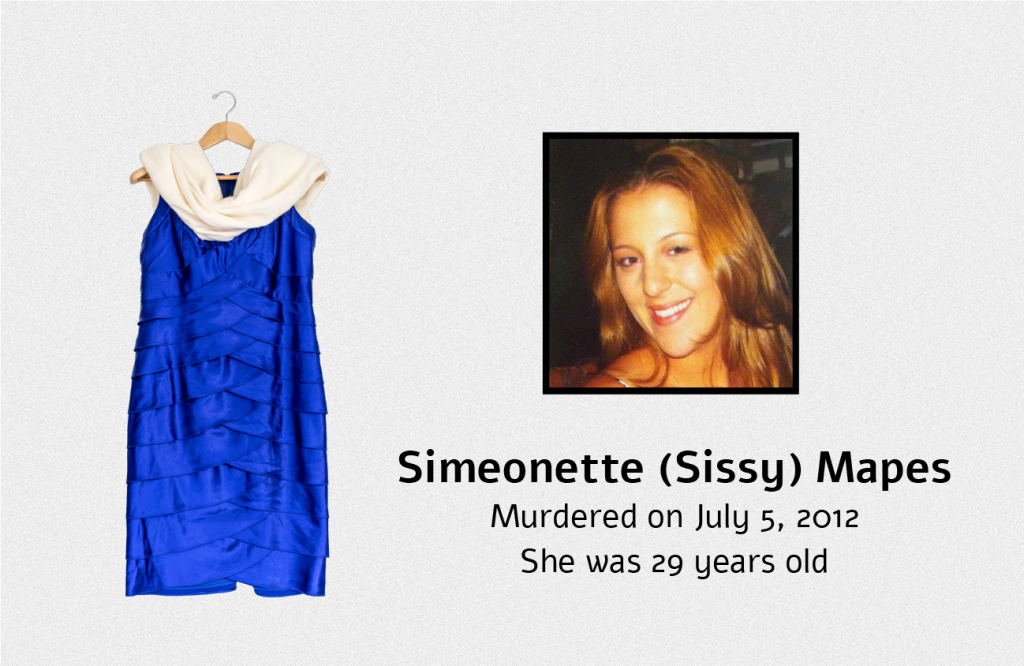
Simeonette (Sissy) Mapes was found stabbed to death by her ex-husband in her Staten Island, New York, home on July 5, 2012. She was 29 years old.
Her murderer had tried to make the crime scene look like a home invasion, but he was arrested that November. After earning a degree in history, Sissy began teaching high school social studies in a depressed area of Brooklyn. She continued her education and earned a master’s degree in 2012. In addition to her busy teaching schedule, she made time volunteering and, among other activities, established a Girl’s Leadership Class, a volunteer after school workshop to encourage self-esteem, pride, and confidence in her female students. When she learned in 2011 that some of her students were not going to receive presents for Christmas, she organized small gifts for everyone in the school. Sissy’s Angels was established to carry on her goodness and the work that she so loved to do. Her murderer was found guilty and is serving time in prison.
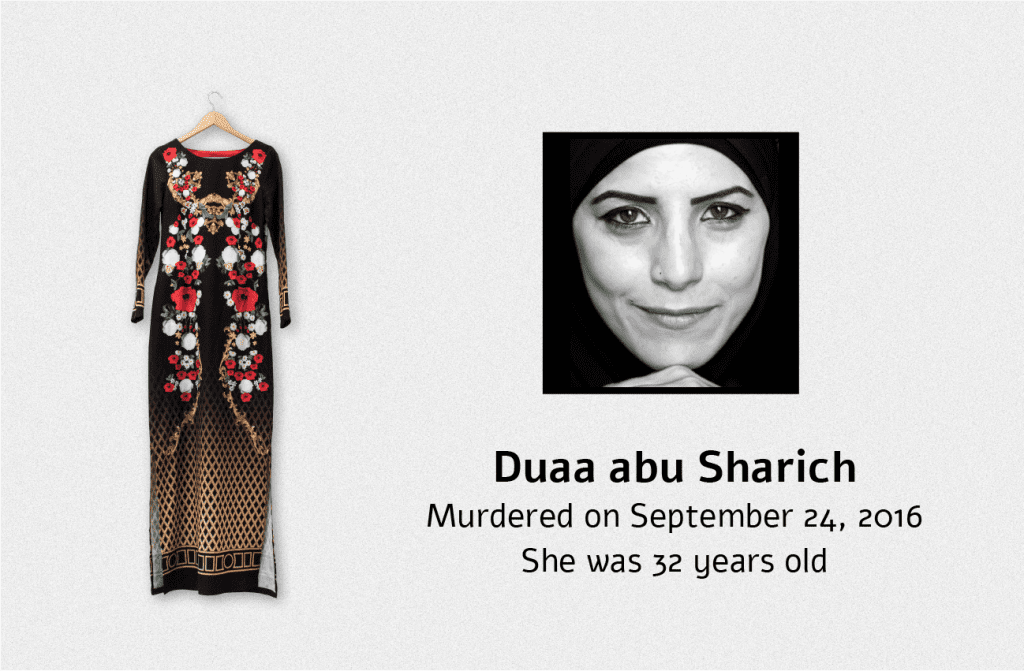
Duaa abu Sharich was murdered in Israel on September 24, 2016. She was 32 years old.
Duaa was murdered in front of her children. She was on her way to bring them to their father, whom she had divorced. After Duaa was shot, one of her daughters ran to her aunt’s house to call for help. Duaa was still alive when a crowd of people arrived, but no one helped her and she bled to death. Duaa’s husband often beat her and once broke her nose. He had taken their children and didn’t allow her to see them. On the evening of her murder, he had agreed to let her see the children. That same evening she was shot by a masked man with a silenced gun. Two years before her murder, Duaa was kidnapped but managed to escape. She was offered the opportunity to go to a women’s shelter but refused, saying she would rather be killed at her home, near her parents. Her sisters remember how she loved to get dressed up, was always well groomed, and matched her clothes to her mandil (scarf). Her murder was never solved.
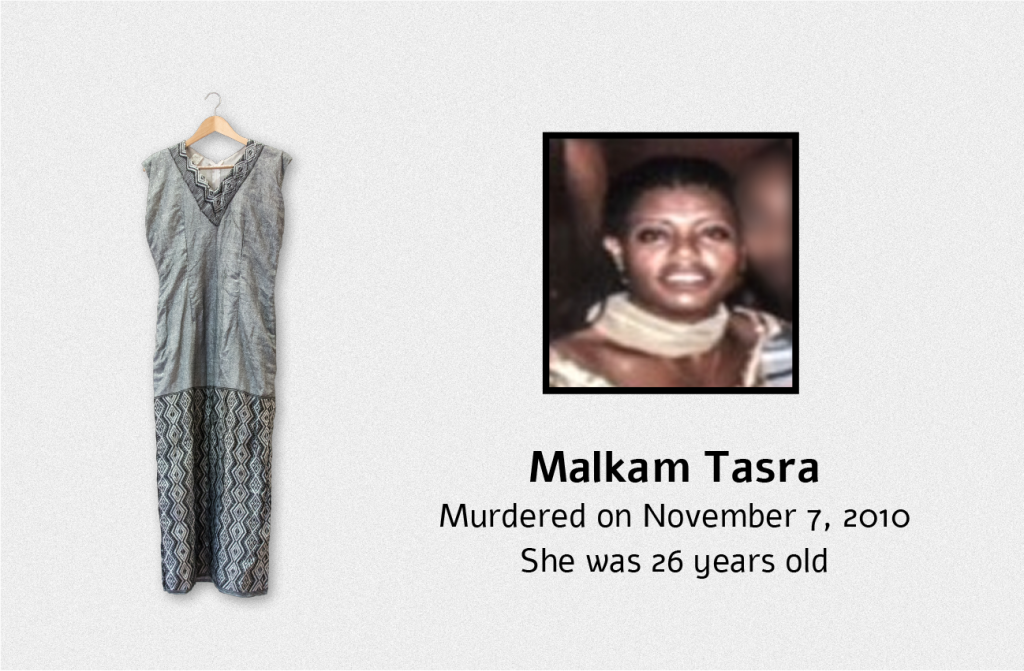
Malkam Tasra was murdered in Israel on November 7, 2010. She was 26 years old.
She was an independent and hard-working woman. She had managed to save enough money to buy her own house and was a warm and kind person who helped everyone around her. She had no enemies. Malkam was divorced and had one daughter. Her parents introduced her to a young man, and six months after they met, he murdered her. At the time of the murder, Malkam’s older brother, her mother, her partner’s mother, and their neighbor were present in the couple’s home. Malkam had asked her partner’s mother to come and calm her son down, because he had become violent. While everyone was in the living room, Malkam entered the bedroom to prepare a travel bag for her daughter. Her partner suddenly entered the bedroom and stabbed her once in the back. When she turned toward him, he stabbed her several times in the chest. Malkam ran out of the room, fell down the stairs, and had a concussion. She later died from the knife wounds. Today Malkam’s mother raises her daughter. The murderer was sentenced to 20 years in prison.
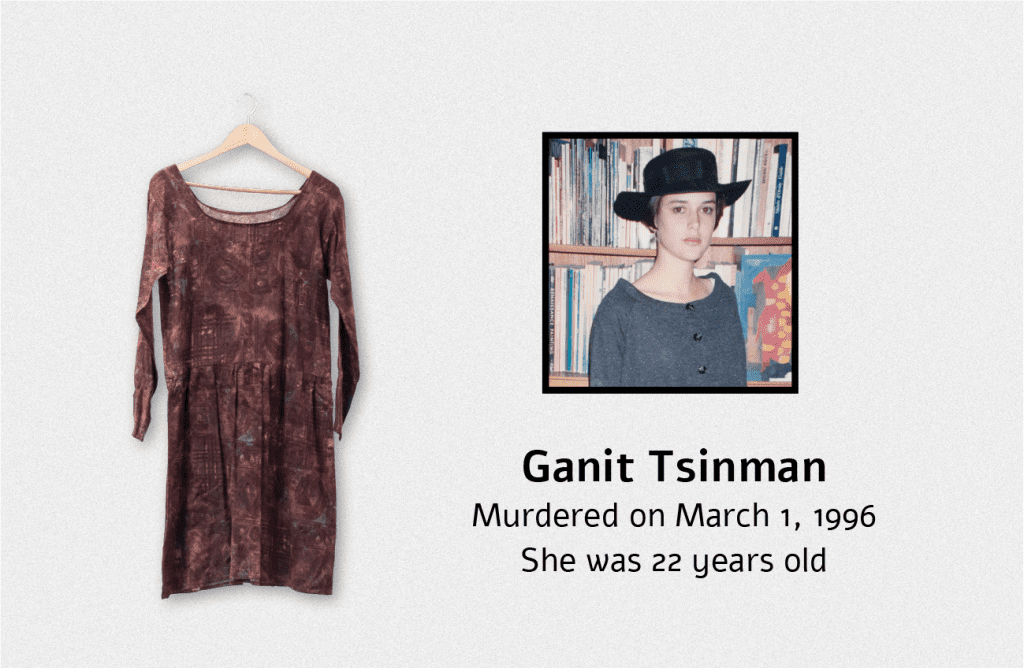
Ganit Tsinman was murdered in Israel on March 1, 1996. She was 22 years old.
Ganit was murdered by her boyfriend, following a brief three-month relationship and after she had decided she was no longer interested in him. Ganit met her murderer in an English class at the University of Haifa. He was an American student who came to study in Israel. He fell in love with Ganit, who was an intelligent feminist young woman and an activist for women’s rights. A week after Ganit ended the relationship, her ex-boyfriend called her and begged her to see him. When she arrived, he cruelly slashed her throat and stabbed her to death. The dress on display was sewn by Ganit herself, and she loved to wear it. The murderer was sentenced to life in prison, but his sentence was reduced to 35 years.
__________
Domestic Violence as a Global Tragedy
She’s Gone is a protest against the international tragic phenomenon of gender-based murder, specifically intimate partner (domestic) violence. The tragic fate of these five young women from Israel and the United States is a microcosm of a worldwide growing pandemic of domestic, or intimate partner, violence. According to the National Coalition Against Domestic Violence, on average nearly twenty people per minute are physically abused by an intimate partner in the United States. During one year, this totals more than ten million victims. Since the outbreak of COVID-19, emerging data and reports have shown that domestic violence has intensified. This concurrent pandemic continues to harm and even kill people, especially women. In addition, it strains essential services, with domestic violence shelters and helplines reaching capacity. This exhibition is intended to raise consciousness and to call for action to address this heinous situation.
__________
Remember the Women Institute thanks everyone who made this exhibit possible
Our Exhibition Partners: Robin Strongin and the Strongin Collection; Keren Goldstein, Adi Levy and the She’s Gone installation; Nadine Epstein and The Moment Gallery, a project of Moment Magazine; and Minister Tammy Ben-Haim and the Embassy of Israel to the United States.
Our Generous Supporters: The Embassy of Israel to the United States, The Five Millers Family Foundation, Holli Gersh and the Edward and Holli Gersh Foundation, Ariela Heilman, Patti Askwith Kenner, and Marilyn Thypin.
Our Remember the Women Institute Volunteers: Cynthia L. Cooper, Joan Dean, Daniel Glassman, Dr. Sonja M. Hedgepeth, photographer Jeff F. Segall, Rachel L. Segall, and exhibition coordinator Dr. Rochelle G. Saidel. (www.rememberwomen.org)
Special Thanks: Jana Lynne Mackey’s mother, Dr. Christie Brungardt, and Simeonette Mapes’s mother, Theresa Mapes, for so generously allowing us to use their daughters’ garments, Rep. Carolyn B. Maloney, playwright Cynthia L. Cooper and actor Lisa Pelikan for All Databases Are Incomplete, Rachel Louise Snyder, author of No Visible Bruises, and Bluelight Strategies.
__________
To accompany the exhibition, on Tuesday, December 7, at 4:30 PM EST, the Moment Gallery of Moment Magazine, along with Remember the Women Institute, the Strongin Collection, and the Israel Embassy, presented a related webinar, featuring She’s Gone creator Keren Goldstein and her associate Adi Levy, award-winning author of No Visible Bruises Rachel Louise Snyder, and Dr. Shoshannah Frydman, executive director of the Shalom Task Force Jewish Domestic Abuse Hotline, with messages from Dr. Rochelle G. Saidel, founding director of Remember the Women Institute and Minister Tammy Ben-Haim, Minister for Public Diplomacy at the Israel Embassy to the United States.
See the video of this webinar below.





Past Online Event: Artists and Writers Respond to Domestic Violence
On December 1, 2020, Remember the Women Institute presented a special webinar, Artists and Writers Respond to Domestic Violence, as part of our She’s Gone programming on domestic violence. The webinar offered a stellar lineup of artists and writers responding to domestic violence. A recording of the event is available.